

Signs & Symptoms
Those who receive treatment from a vein specialist may get relief from their symptoms and avoid worsening or advancing of the disease over time. Increased pressure and enlargement of the leg veins from valve dysfunction and venous reflux cause the veins to swell and progress to more painful symptoms as they push on nearby nerves and skin.23 How do you know if you or someone you love has signs of venous disease?
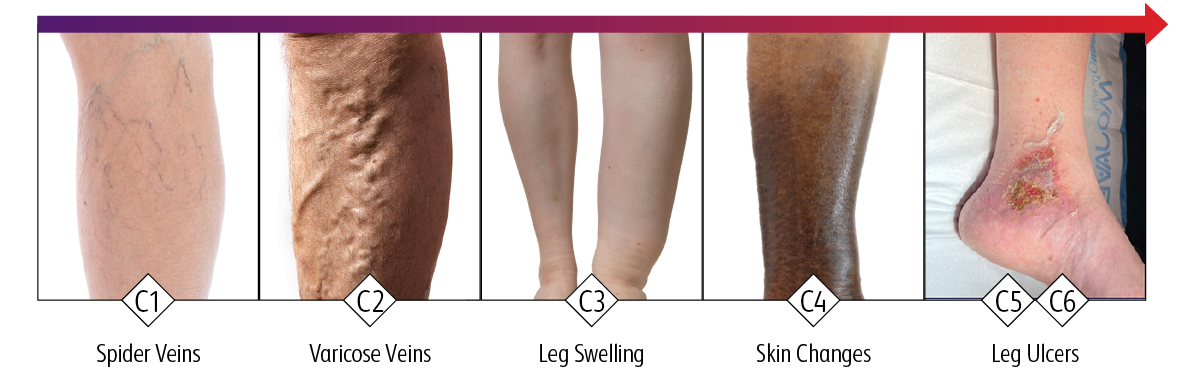
Common signs and symptoms in the lower legs include:22
- Varicose veins or spider veins
- Heaviness, aching, tightness or fatigue
- Discomfort, pain or swelling
- Restlessness or muscle cramping
- Numbness or itching
- Skin texture or color changes
- Ulcer or wound
CVD is a progressive disease. Without treatment, signs and symptoms may worsen. CVD can develop into a more serious form of vein disease called chronic venous insufficiency (CVI) that includes leg swelling, skin changes and, in severe cases, venous ulcerations.1